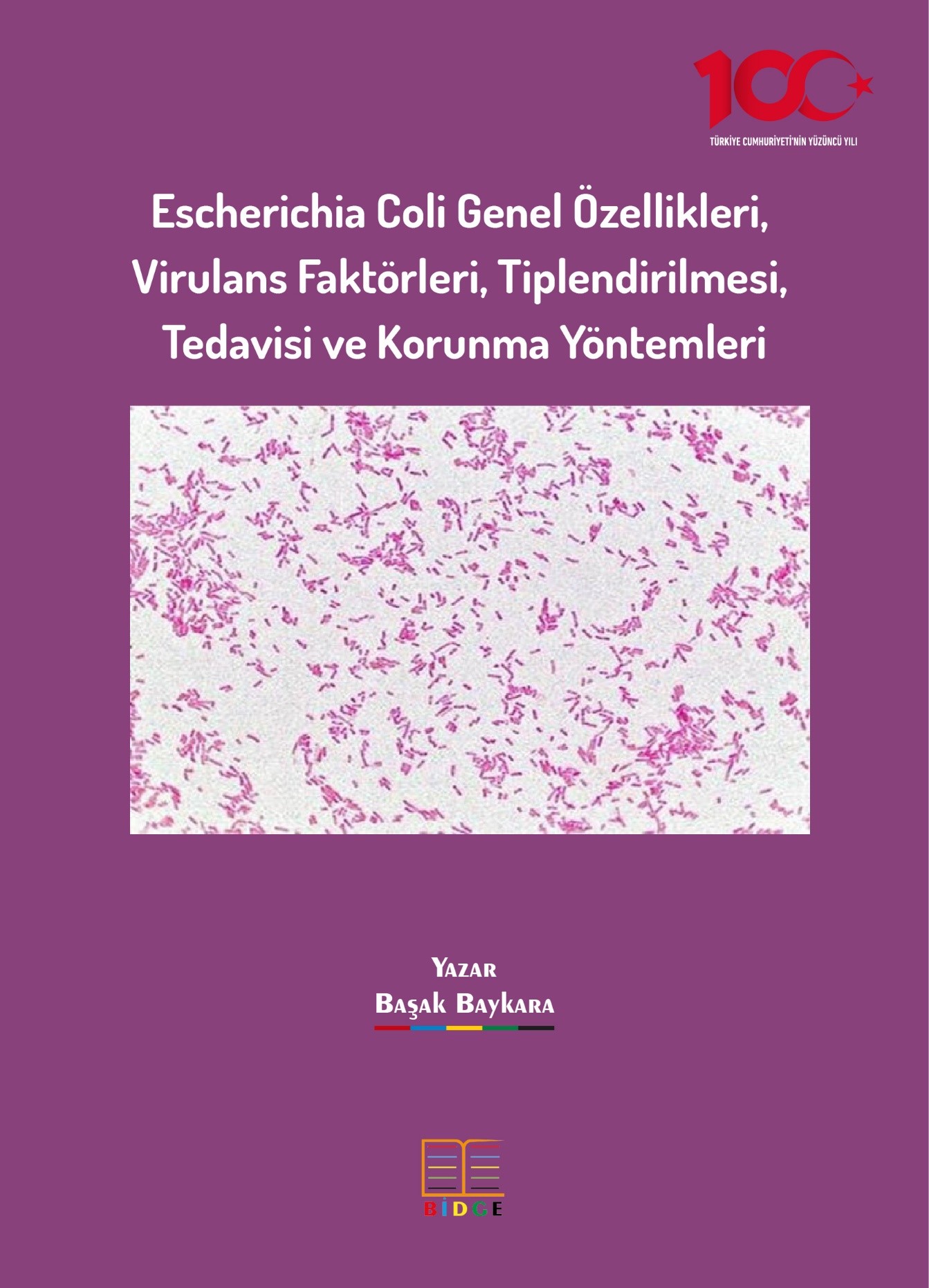
Escherichia Coli Genel Özellikleri, Virulans Faktörleri, Tiplendirilmesi, Tedavisi ve Korunma Yöntemleri
E-kitap kirala
Çevrim içi okumaOkuma sürenizi seçin. Erişim, ödeme onayından sonra başlar.
Giriş yaparak devam edebilirsiniz. Kiralama yalnızca çevrim içi okuma içindir; indirme hakkı içermez.
Özet
Bu kitap, Escherichia coli'nin genel özellikleri, virulans faktörleri, tiplendirilmesi, tedavisi ve korunma yöntemleri konularını kapsamlı şekilde ele almaktadır. E. coli'nin bağırsaklarda yaygın bulunan bir bakteri olduğu, bazı suşlarının patojenik özellik göstererek bebek, çocuk ve immun sistemi baskılanmış bireylerde ciddi hastalıklara yol açabileceği vurgulanmaktadır. Kitapta, bakterinin morfolojik, biyokimyasal ve genomik özellikleri; hücre duvarı yapısı ve antijen çeşitliliği detaylı açıklanmıştır. Virulans faktörleri arasında sideroforlar, toksinler (CDT, CNF), hemolizinler ve kolisinler gibi moleküler etkenler üzerinde durulmuştur. E. coli'nin antibiyotik direncine sahip suşlarının giderek arttığı ve bu nedenle tedavi yaklaşımlarının önem kazandığı belirtilmiş; özellikle geniş spektrumlu beta-laktamaz üretimindeki artışa dikkat çekilmiştir. Moleküler tiplendirme teknikleri (PCR, RAPD, AFLP, MLST, PFGE, RFLP) tanımlanmış ve E. coli suşlarının fenotipik ve genotipik sınıflandırılması detaylandırılmıştır. Kitap, E. coli enfeksiyonlarının kontrolü için dayanıklı altyapı sistemleri, kişisel hijyen ve temiz su-gıda tüketiminin kritik olduğunu vurgulamaktadır. Bu kapsamlı çalışma, E. coli ile ilgili temel ve ileri bilgiler sunarak, enfeksiyon kontrolü ve tedavi stratejilerinin gelişimine katkı sağlamayı amaçlamaktadır.
This book provides a comprehensive overview of Escherichia coli, including its general characteristics, virulence factors, typing, treatment, and prevention methods. It highlights that E. coli is a commonly found bacterium in the intestines, with certain strains exhibiting pathogenic traits, causing severe diseases especially in infants, children, and immunocompromised individuals. The book elaborates on the bacterium’s morphological, biochemical, and genomic features, and details its cell wall structure and antigen diversity. Virulence factors such as siderophores, toxins (CDT, CNF), hemolysins, and colicins are discussed at the molecular level. It emphasizes the increasing prevalence of antibiotic-resistant strains, notably the production of extended-spectrum beta-lactamases, underlining the importance of appropriate treatment approaches. Molecular typing methods—including PCR, RAPD, AFLP, MLST, PFGE, and RFLP—are described, along with both phenotypic and genotypic classifications of E. coli strains. The book stresses that controlling E. coli infections depends highly on robust infrastructure, personal hygiene, and access to clean water and food. This detailed study aims to provide foundational and advanced knowledge to support the development of effective infection control and treatment strategies against E. coli.
Atıf bilgisi
BAŞAK BAYKARA. (2024). Escherichia Coli Genel Özellikleri, Virulans Faktörleri, Tiplendirilmesi, Tedavisi ve Korunma Yöntemleri. Bidge Yayınları.