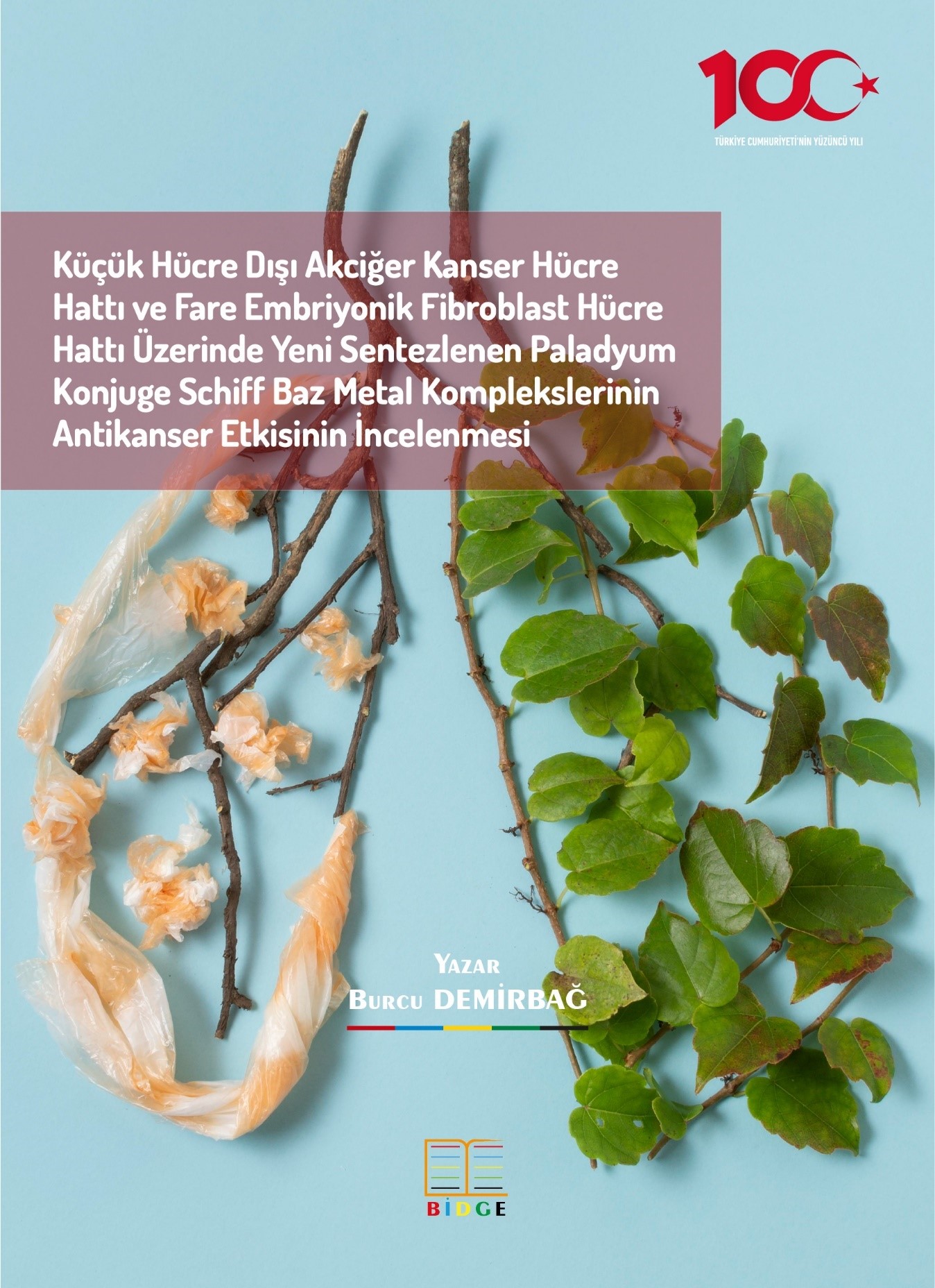
Küçük Hücre Dışı Akciğer Kanser Hücre Hattı ve Fare Embriyonik Fibroblast Hücre Hattı Üzerinde Yeni Sentezlenen Paladyum Konjuge Schiff Baz Metal Komplekslerinin Antikanser Etkisinin İncelenmesi
E-kitap kirala
Çevrim içi okumaOkuma sürenizi seçin. Erişim, ödeme onayından sonra başlar.
Giriş yaparak devam edebilirsiniz. Kiralama yalnızca çevrim içi okuma içindir; indirme hakkı içermez.
Özet
Bu çalışma, küçük hücre dışı akciğer kanseri (KHDAK) hücre hattı ve fare embriyonik fibroblast hücre hattı üzerinde yeni sentezlenen paladyum konjuge Schiff baz metal komplekslerinin antikanser etkisini araştırmaktadır. Akciğer kanseri, sigara içimi başta olmak üzere çeşitli çevresel ve genetik faktörlerin etkisiyle gelişen ciddi bir kanser türüdür. KHDAK, akciğer kanserlerinin %80'inden fazlasını oluşturmakta olup, tedavi stratejileri genellikle kemoterapi, immünoterapi ve hedefe yönelik tedavileri içermektedir. Bu kanserde sitotoksik etkilerin yanı sıra apoptoz, hücre döngüsü kontrolü ve tümör mikroçevresinin düzenlenmesi önemli role sahiptir. Cisplatin ve karboplatin gibi platin bazlı ilaçlar yaygın kullanılırken, paladyum içeren yeni metal komplekslerin antikanser potansiyeli araştırılmaktadır. Schiff bazları, metal komplekslerinde ligand olarak görev yapan organik bileşikler olup, biyolojik aktiviteleri yüksek ve farklı mekanizmalarla kanser hücrelerine etkili olabilirler. Çalışma, bu yeni paladyum konjuge Schiff baz komplekslerinin gelişmiş KHDAK hücrelerinde apoptozu teşvik edip etmeyeceği ve tümör hücre çoğalmasını nasıl etkilediğini incelemektedir. Ayrıca, bu bileşiklerin antikanser etkileşim mekanizmaları DNA hasarı, redoks dengesinin değiştirilmesi, hücre isteği ve hücre döngüsü düzenlenmesi gibi biyokimyasal süreçler üzerinde yoğunlaşmaktadır. Literatür incelemesi, KHDAK'nin moleküler heterojenliği ve mutasyon çeşitliliği ile tedavide hedefe yönelik yaklaşımların önemini vurgulamaktadır. Çalışmanın sonuçları, paladyum Schiff baz metal komplekslerinin KHDAK tedavisinde yeni bir umut kaynağı olabileceğini göstermektedir. Bu kapsamda, kanser biyolojisi, hücresel sinyal mekanizmaları, apoptoz ve hücre döngüsü kontrolü gibi temel süreçlerin anlaşılması ve yeni terapi stratejilerinin geliştirilmesi hedeflenmektedir.
This study investigates the anticancer effects of newly synthesized palladium-conjugated Schiff base metal complexes on non-small cell lung cancer (NSCLC) cell lines and mouse embryonic fibroblast cell lines. Lung cancer, primarily caused by smoking and other environmental and genetic factors, is a major malignancy with NSCLC accounting for more than 80% of cases. Treatment approaches typically involve chemotherapy, immunotherapy, and targeted therapies. Beyond cytotoxic effects, processes like apoptosis, cell cycle regulation, and interaction with the tumor microenvironment play crucial roles in lung cancer pathophysiology. While platinum-based drugs such as cisplatin and carboplatin are widely used, exploring the anticancer potential of novel metal complexes, specifically palladium-based agents, is of growing interest. Schiff bases serve as organic ligands in these metal complexes and exhibit significant biological activity through mechanisms including DNA damage induction, redox balance modulation, and interference with cell proliferation and apoptosis. This research focuses on whether these new palladium-conjugated Schiff base complexes can induce apoptosis and inhibit tumor cell proliferation in advanced NSCLC cells. The review of literature highlights the molecular heterogeneity and mutational landscape of NSCLC, underscoring the importance of targeted therapies. Findings from the study suggest that these palladium Schiff base metal complexes represent a promising avenue for NSCLC treatment. The work aims to deepen understanding of cancer biology, cellular signaling pathways, apoptosis, and cell cycle control to contribute to the development of novel therapeutic strategies.
Kitap Bölümleri
1 bölüm · Mevcut sayfa ve DOI kayıtlarıAtıf bilgisi
Burcu DEMİRBAĞ, BURCU DEMİRBAĞ. (2024). Küçük Hücre Dışı Akciğer Kanser Hücre Hattı ve Fare Embriyonik Fibroblast Hücre Hattı Üzerinde Yeni Sentezlenen Paladyum Konjuge Schiff Baz Metal Komplekslerinin Antikanser Etkisinin İncelenmesi. Bidge Yayınları.