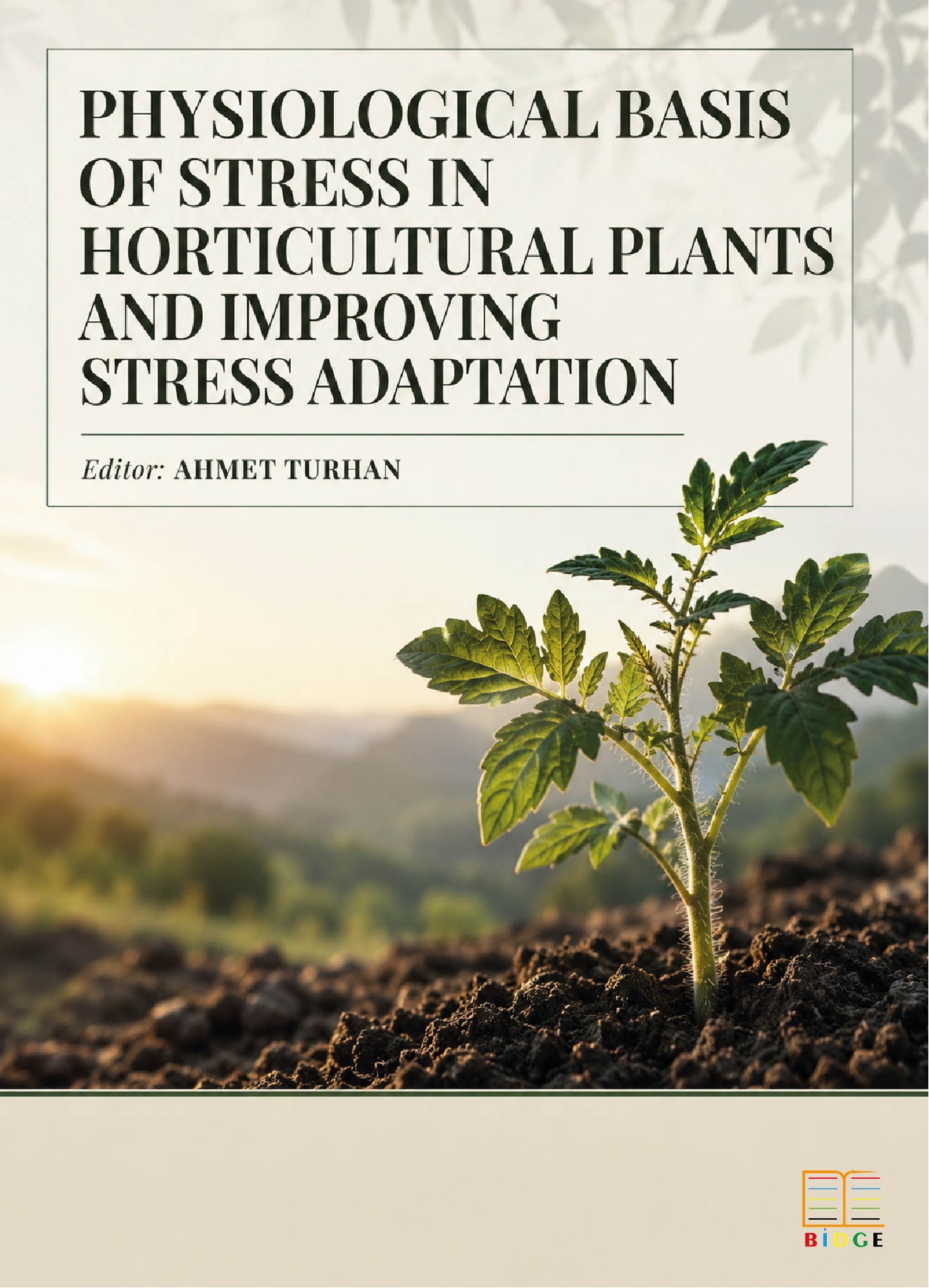
Physiological Basis of Stress in Horticultural Plants and İmproving Stress Adaptation
Dijital dosya henüz hazır değil
Özet
Bu eser, bahçıvanlık bitkilerinde stresin fizyolojik temellerini inceleyerek stres adaptasyonunun iyileştirilmesini hedeflemektedir. İlk bölümde, Türkiye'de önemli bir ürün olan fındıkta görünmeyen verim kayıpları, boş meyve, çotanak dökümü ve randıman düşüşü gibi faktörler incelenmiş, bu problemlerin erken uyarı sistemleri ve akıllı tarım yaklaşımlarıyla yönetilebileceği savunulmuştur. İkinci ve üçüncü bölümlerde, iklim değişikliğinin artan su kıtlığı bağlamında, farklı hıyar genotiplerinin kuraklığa karşı fizyolojik ve biyokimyasal tepkileri istatistiksel yöntemlerle analiz edilmiş; osmotik ayarlama, fotosentez stabilitesi, antioksidan savunma ve karbonhidrat taşınımı gibi mekanizmalar belirlenmiştir. Kuraklığa dayanıklı genotipler tanımlanmış ve bu çeşitlerin iklim değişikliğine uyumlu üretim için seçilmesi önerilmiştir. Dördüncü bölüm ise elma bitkisinde abiyotik ve biyotik streslerin fitokimyasal bileşim üzerindeki etkilerini ele almakta; fenolik bileşikler, flavonoidler ve antioksidan sistemlerin stres toleransındaki rollerine vurgu yapmaktadır. Ayrıca, stres yönetiminde biyoteknolojik yaklaşımlar, hassas sulama teknikleri ve beslenme stratejilerinin önemi belirtilmiştir. Kitap genelinde stresin bitkilerde fizyolojik, biyokimyasal ve moleküler düzeyde çok katmanlı etkileri ayrıntılı bir şekilde açıklanmakta ve üretim süreçlerinde akıllı tarım ile dijitalleşmenin potansiyeli vurgulanmaktadır.
This work focuses on the physiological basis of stress in horticultural plants and strategies for improving stress adaptation. The first chapter explores the concept of hidden yield losses in hazelnut production in Turkey, emphasizing the roles of blank nuts, cluster drop, and reduced kernel ratio as key contributors. It advocates for early warning systems and smart farming approaches for better management. The second and third chapters analyze drought stress responses across cucumber genotypes using multivariate statistical techniques, highlighting physiological and biochemical mechanisms including osmotic adjustment, photosynthetic stability, antioxidant defenses, and carbohydrate transport. The identification of drought-resilient genotypes supports breeding for climate-resilient cultivation. The fourth chapter examines the effects of abiotic and biotic stresses on the phytochemical composition of apple trees, underscoring the significance of phenolic compounds, flavonoids, and antioxidant systems for stress tolerance. Biotechnological methods, precise irrigation, and nutritional management are discussed as vital for stress mitigation. Throughout the book, the multifaceted impacts of stress at physiological, biochemical, and molecular levels are detailed, and the integration of smart farming technologies in horticultural production is emphasized to enhance resilience and sustainability.
Kitap Bölümleri
4 bölüm · Mevcut sayfa ve DOI kayıtlarıAtıf bilgisi
AHMET TURHAN, MERAL KUTLU, MEVLÜDE TATAR, MEVLÜDE TATAR, ÖMER FARUK BALTA, SAİD EFE DOST. (2026). Physiological Basis of Stress in Horticultural Plants and İmproving Stress Adaptation. Bidge Yayınları.