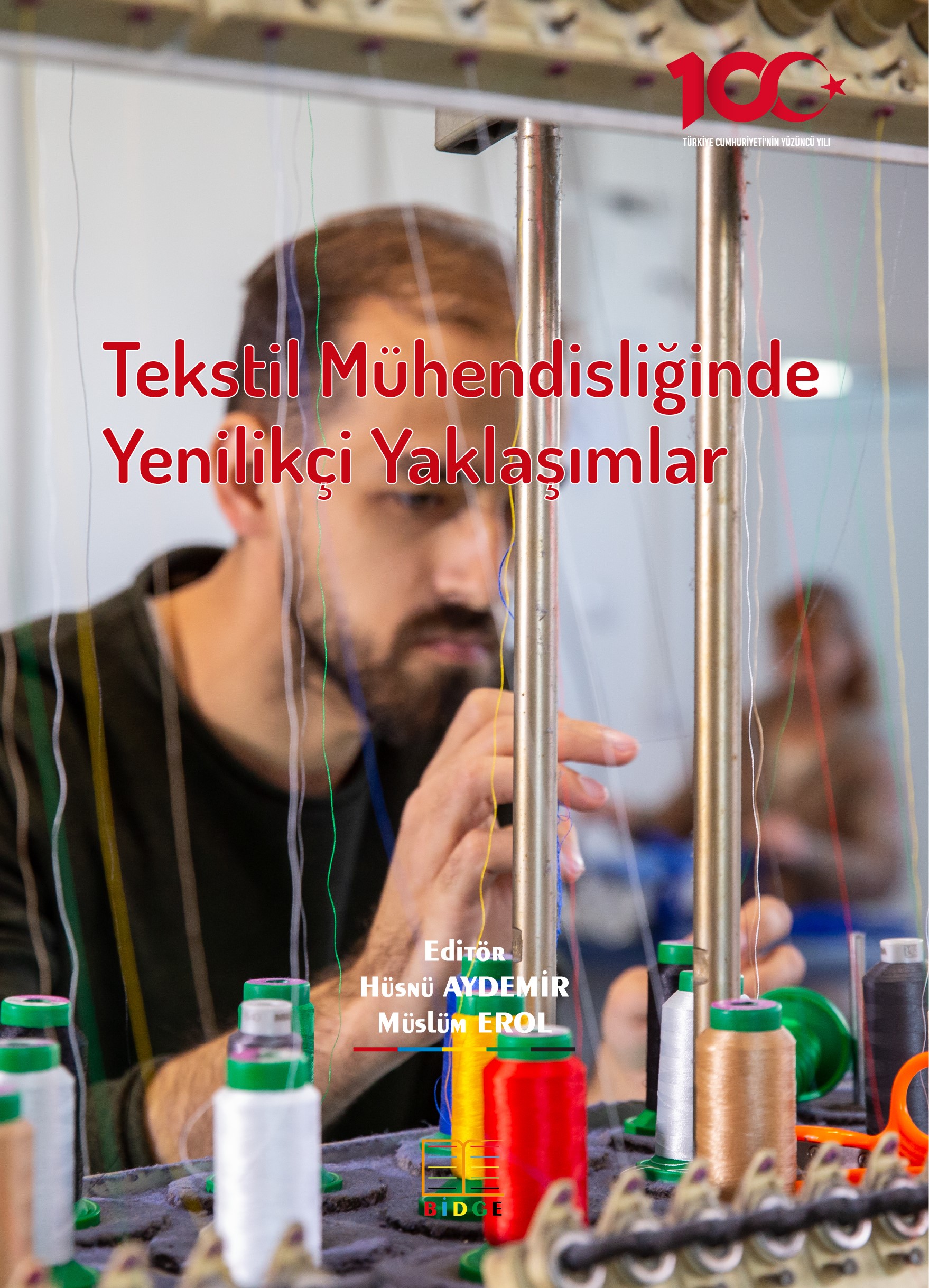
Tekstil Mühendisliğinde Yenilikçi Yaklaşımlar
E-kitap kirala
Çevrim içi okumaOkuma sürenizi seçin. Erişim, ödeme onayından sonra başlar.
Giriş yaparak devam edebilirsiniz. Kiralama yalnızca çevrim içi okuma içindir; indirme hakkı içermez.
Özet
“Tekstil Mühendisliğinde Yenilikçi Yaklaşımlar” adlı eser, tekstil mühendisliği alanındaki güncel ve sürdürülebilir yaklaşımları sunmaktadır. Kitapta, ceviz kabuğu tozu içerikli epoksi kompozitlerin yapısal ve mekanik özellikleri incelenmiş, doğal dolgu malzemeleri ile kompozitlerin çevre dostu ve ekonomik avantajları vurgulanmıştır. Ceviz kabuğu partiçiklerinin epoksi reçine ile karışımında dolgu oranı ve parçacık boyutunun yoğunluk, boşluk ve su emilimi gibi fiziksel özellikleri etkilediği belirlenmiştir. Hidrofilik özellikleri nedeniyle su emiliminin arttığı ve alkali muamele ile bu özelliklerin optimize edilebildiği ortaya konmuştur. Ayrıca, hindi tüyleri atıklarının yıkama, dezenfeksiyon ve kullanım alanları ısı ve ses yalıtımı gibi sürdürülebilir materyal üretiminde değerlendirilmiştir. Hindi tüylerinin fiziki ve kimyasal yapıları detaylandırılmış, yıkama sonrası higroskopiklik ve su emme kapasiteleri pamuk lifleri ile karşılaştırılmıştır. Aerojel içerikli tekstil materyallerinin akustik performansları değerlendirilmiş, aerojel granül boyutu ve malzeme kompozisyonunun ses ve ısı yalıtımında kritik rol oynadığı tespit edilmiştir. Aerojelin hafif, yüksek gözenekli ve çevre dostu özellikleri ile tekstil alanında yenilikçi uygulamalara olanak sağladığı vurgulanmıştır. Son bölümde, esansiyel yağlar, sabit yağlar ve bitki özlerinin elektrosplinning yöntemleriyle nanofiber üretiminde kullanımı karşılaştırılmıştır. Bu doğal katkı maddelerinin nanofiber özelliklerine, işleme yöntemlerine ve uygulama alanlarına etkileri detaylıca analiz edilmiş, esansiyel yağların hem yüksek antibakteriyel etkinlik hem de volatilite nedeniyle zorlukları olduğu, sabit yağların ise nem bariyeri ve yapısal iyileştirmelerde avantaj sağladığı belirtilmiştir. Bitki özlerinin ise geniş uygulama potansiyeli ve yüksek stabiliteye sahip olduğu bildirilmiştir. Kitap, tekstil mühendisliği alanında sürdürülebilir, yenilikçi malzeme ve üretim tekniklerine ışık tutmaktadır.
The book “Innovative Approaches in Textile Engineering” presents contemporary and sustainable methodologies in the field of textile engineering. It explores the use of walnut shell powder in epoxy composites, highlighting the physical and mechanical properties influenced by filler ratio and particle size, and emphasizes the eco-friendly and economic advantages of natural fillers in composites. The study addresses the hydrophilic nature of fillers, water absorption behavior, and the optimization of these properties through alkaline treatments. Additionally, waste turkey feathers are investigated for their cleaning, disinfection, and potential use in thermal and acoustic insulation materials, with detailed analysis of their physical and chemical structures. Hygroscopicity and water absorption tests show that turkey feathers have higher moisture uptake compared to cotton fibers. The book also examines the acoustic properties of aerogel-included textile materials, demonstrating that granule size and composition critically influence thermal and sound insulation performance. The ultralight, porous, and environmentally friendly attributes of aerogels make them ideal for innovative textile applications. The final section focuses on the use of essential oils, fixed oils, and plant extracts in electrospinning nanofiber production. It provides comparative analysis of these natural additives concerning fiber morphology, processing methods, and functional applications. Essential oils possess strong antimicrobial properties but face challenges due to volatility, fixed oils offer structural and moisture barrier benefits but are less explored, and plant extracts demonstrate wide applicability with high stability. Overall, the book contributes valuable insights into sustainable and innovative materials and techniques in textile engineering.
Kitap Bölümleri
4 bölüm · Mevcut sayfa ve DOI kayıtlarıAtıf bilgisi
Hüsnü AYDEMİR Müslüm EROL, HÜSNÜ AYDEMİR, MÜSLÜM EROL, SÜREYYA KOCATEPE, AYŞE ÖZKAL. (2024). Tekstil Mühendisliğinde Yenilikçi Yaklaşımlar. Bidge Yayınları. DOI: 10.70269/brbkzq9q6qnz